

Are Hashtags Still Worth it In 2026?
The short answer is no.
The long answer is: not like before.
Navigating 2026, the digital landscape continues evolving at record speed, with Instagram remaining a powerhouse in social media marketing.
However, a critical element of Instagram’s evolution is the completely redefined role of hashtags.
Once a straightforward tool for categorization and a “growth hack” for visibility, hashtags have transformed as algorithms now understand content far beyond text.
So the real question is: where do hashtags fit in the new era of Social SEO?
This blog tears apart the mystery: are hashtags still relevant in 2026—and if they are, how do you use them effectively today?
Here are all the topics we will cover in this guide
The Genesis and Evolution of Hashtags
The 1st platform to use hashtags was Twitter, pioneered by Chris Messina.
Its initial function was simple yet revolutionary: grouping related content to streamline user experiences.
Soon after that, hashtags became a staple across social media platforms, with Instagram adopting them to categorize content, increase engagement, attract niche followers, and strengthen brand images.
Back then, it was very easy to use; generating tons of free traffic was as simple as pasting 30 tags. Users that used it correctly saw a huge increase in visibility.
On top of that, Hashtags became instrumental in amplifying messages and powering hashtag campaigns, especially for companies, businesses, and advocacy groups.
The Current Role of “Tags” in Digital Marketing
Today, hashtags for Instagram have transcended beyond simple categorization, playing a quieter, yet specific role in digital marketing strategies.
The focus has shifted entirely from “mass reach” to “strategic labeling.”
Rather than indiscriminately using a large number of word phrases, the trend in 2026 is to use fewer, more meaningful ones that act as data points for the algorithm.
But why is that the case now?
Simply put, the Algorithms (powered by advanced AI) have become incredibly smart at picking up the actual intent of the post.
They now “watch” your video and “read” your image pixels to understand the content without needing you to label it.
Because the algorithm relies on machine learning to categorize content, hashtags now serve merely as a secondary confirmation signal.
Using too many tags can now confuse the algorithm or, worse, mark your account as “spammy.”
The fewer and more precise the hashtags, the easier it is for the algorithm to file your content correctly.
This evolution points to the importance of understanding audience preferences. Even Instagram CEO Adam Mosseri has repeatedly stated that hashtags “Don’t really help views anymore.” In 2026, this statement is more accurate than ever hashtags are for categorization, not distribution.
The Age of Keywords & Social SEO
This strategic use of word phrases is about more than just tags; it’s about Social SEO (Search Engine Optimization).
In 2026, Instagram “tags” are just one small part of a larger SEO puzzle.
The algorithm now treats your entire post as a searchable database.
It scans:
Your Caption: (The most important keyword area)
On-Screen Text: (The words that appear on your Reel/Image)
Alt Text: (The description embedded in the photo settings)
The Hashtags: (The final categorization label)
This shift highlights the increasing importance of content categorization.
You are no longer just “tagging” a post; you are optimizing it to be found in search results both on Instagram and, increasingly, on Google.
While hashtags haven’t been deleted from the platform, they have effectively been replaced by Keywords as the primary driver of discovery.
If your caption describes “Homemade Pepperoni Pizza in Ashrafieh,” you are likely to be found by local foodies even without the hashtag.
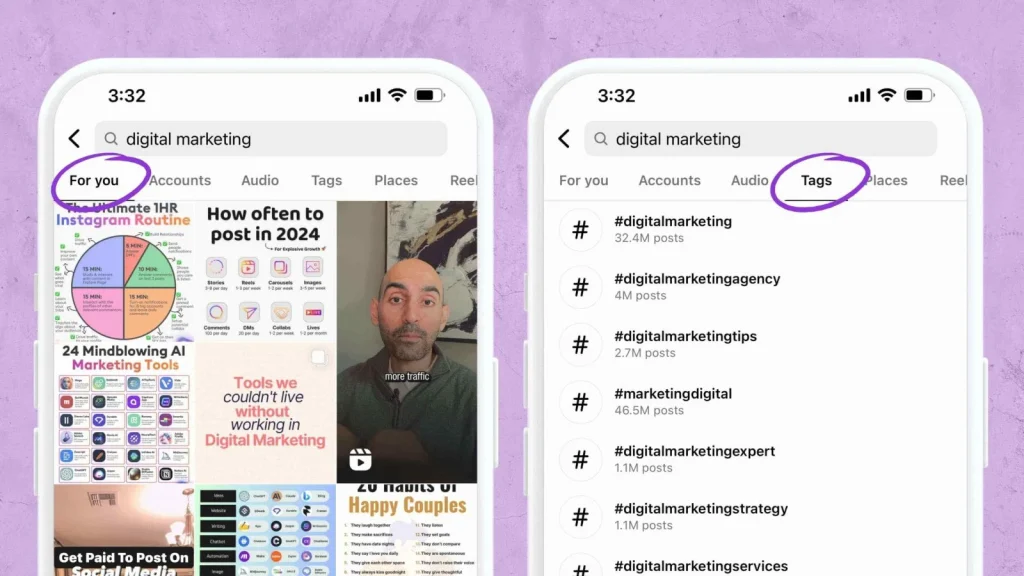
Navigating Hashtag Use: Quantity Versus Quality
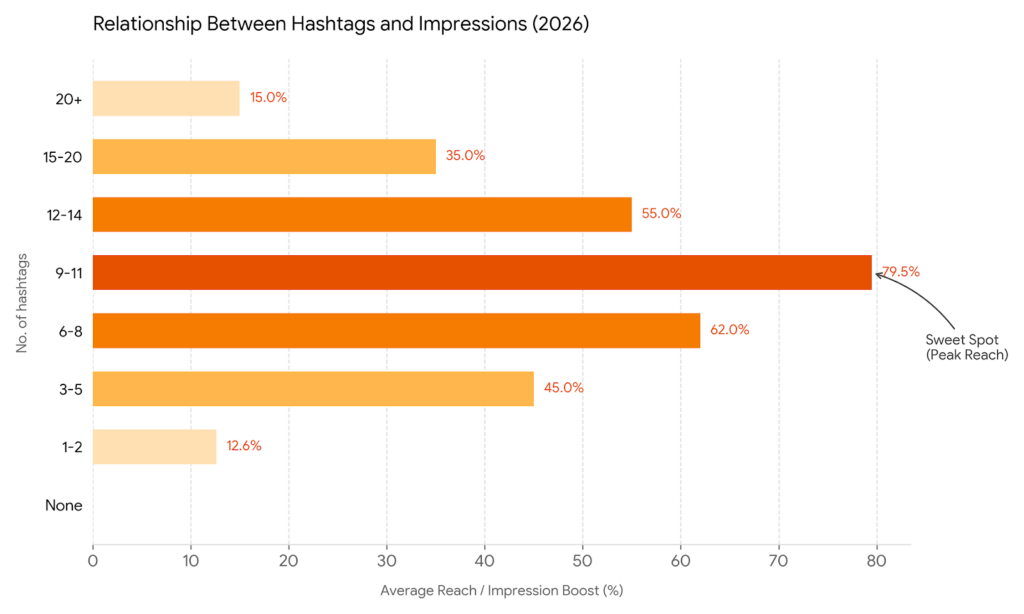
In the early stages of Instagram, users were inclined to add as many hashtags as possible, often reaching the maximum limit of 30. This practice, however, is now considered obsolete and potentially harmful to your reach.
The “hashtag-ladder” approach (13-15 tags) has also faded.
Recent updates and algorithmic behaviors in 2026 suggest a “Less is More” approach.
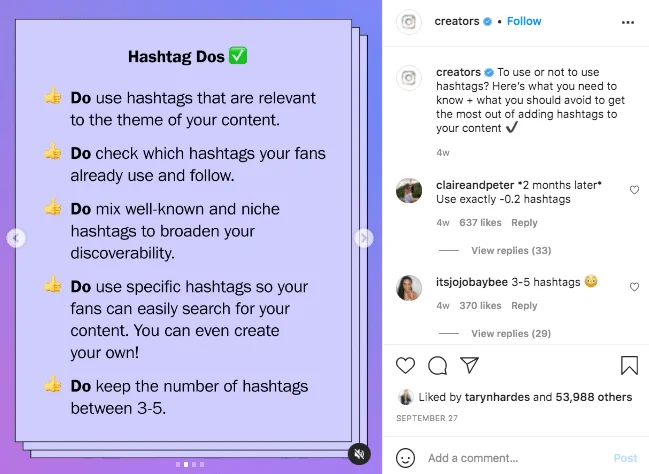
The current best practice is to use between 3 to 5 highly relevant word phrases per post.
This guidance aligns with their current role as SEO descriptors.
Using 30 tags today often signals to the algorithm that you are trying to “game” the system, which can result in reduced reach.
Significantly, studies examining millions of posts over the last few years continue to show no significant difference in engagement rates based on the number of tags used.
In fact, posts with zero tags but excellent SEO captions often outperform posts with 30 tags but poor context.
This underscores that content quality and relevance are the kings of 2026.
Optimizing Hashtag Performance and Content Quality
In 2026, using hashtags on Instagram the right way means finding a balance between choosing the right ones and putting them in the right place.
It’s best to use hashtags that are closely related to what your post is about (even if they are low volume).
Example: If you’re posting a photo of homemade pizza, good hashtags might be
#homemadepizzalebor#cookingatashrafieh.What to avoid: Generic tags like
#fyp,#viral,#pizza, or#love. These are too broad, and the algorithm ignores them.
The Hybrid Strategy: Don’t just rely on the tag.
Ensure the phrase “Homemade Pizza in Beirut” appears in your caption and your Alt Text.
The hashtag #homemadepizzaleb then acts as the final anchor to tie it all together.
To take it a step further, tracking and measuring your effectiveness is essential.
Tools like Brand24, HashtagExpert, and IQhashtags.com remain vital not just for finding tags, but for finding the trending keywords and topics your audience cares about.
One last thing to keep in mind is awareness of banned hashtags.
Even in 2026, Instagram maintains a list of restricted words.
Using them can “shadowban” your post, killing its visibility immediately.
Always vet your keywords before posting.
Conclusion: Embracing the New Word Phrase Concept
As we navigate through 2026, it’s evident that Instagram hashtags are far from dead but their purpose has changed forever.
They are no longer magic buttons for reach; they are strictly tools for Social SEO categorization.
For digital marketers and content creators, mastering the art of relevant, strategic keyword usage across captions, reels, and tags is not just beneficial it’s essential for success.
Ready to boost your brand’s digital game? At Fatcow Digital, we’re not just following trends; we’re setting the strategy for the future.
Elevate your online presence with our expert Social SEO and content strategies.
Let’s tailor a digital marketing plan just for you.
Ready to Boost Your Instagram Presence?
Discover the secrets to effective hashtags today!
Join us for tips and updates on marketing.